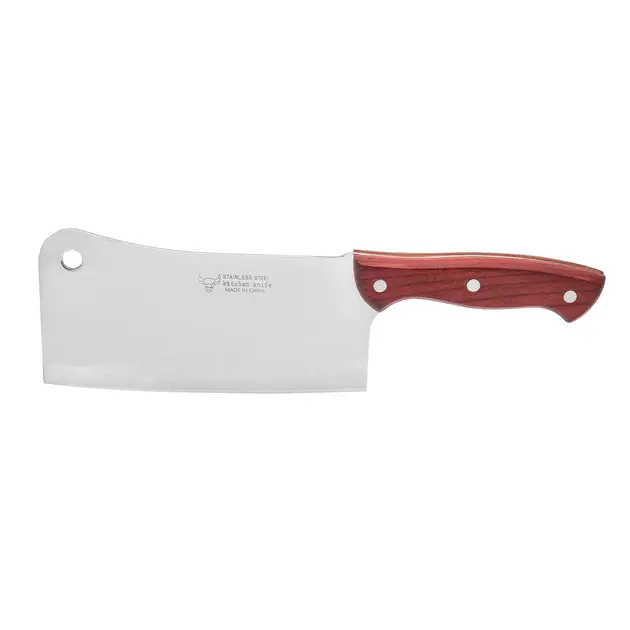
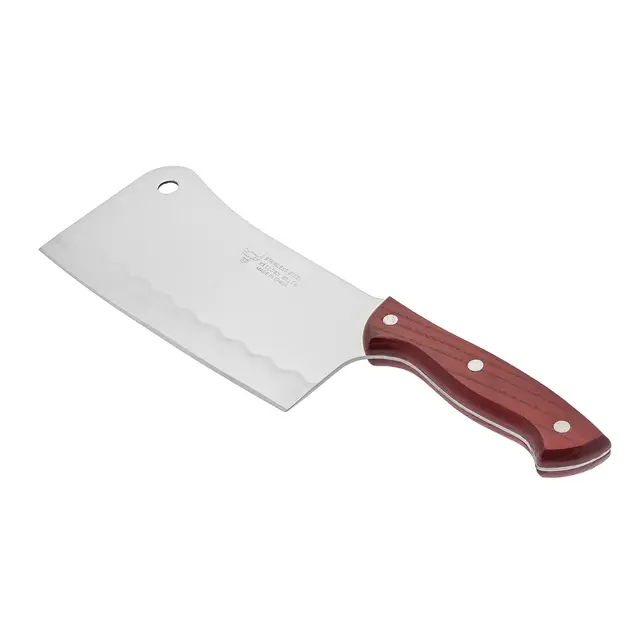
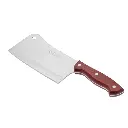

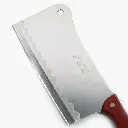
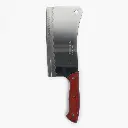
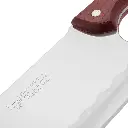
Cleaver Knife Heavy Duty Stainless Steel .435 kg 8" 20x10 cm
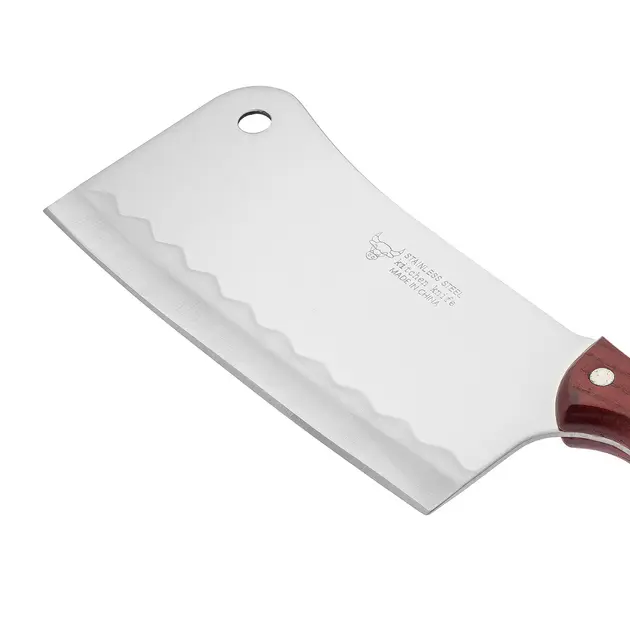
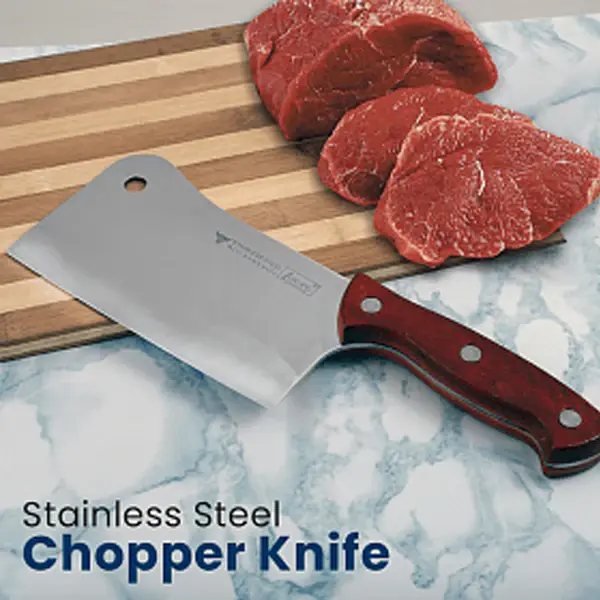
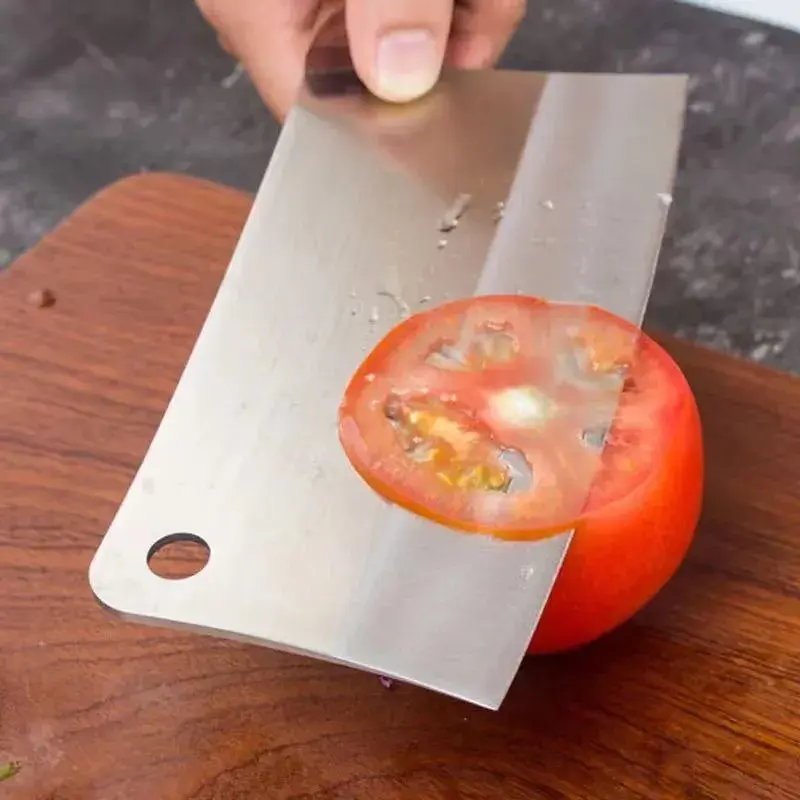
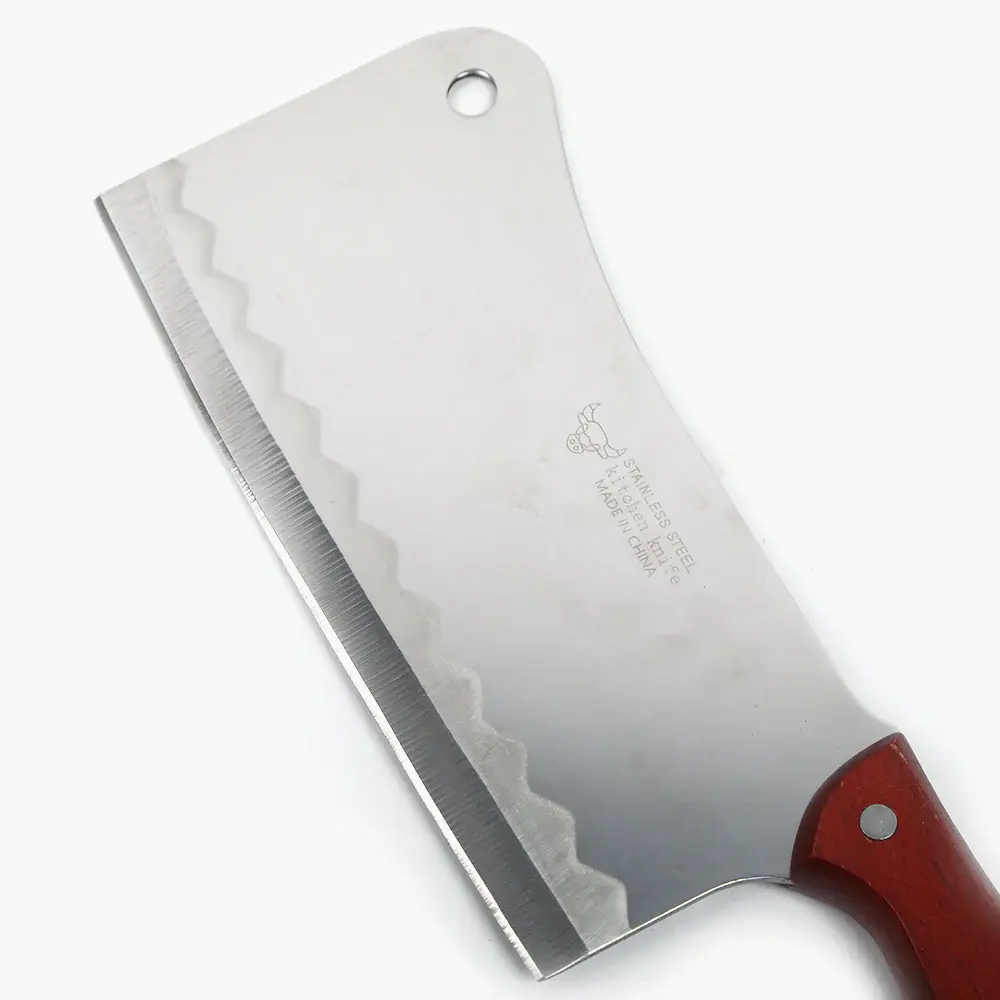
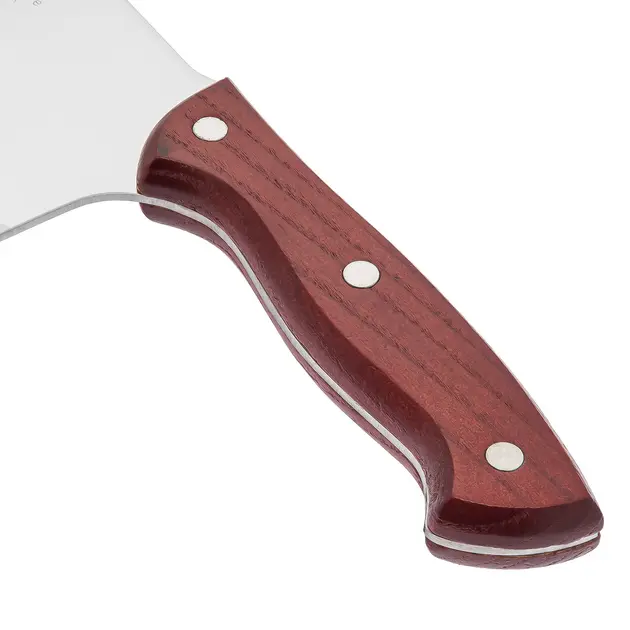
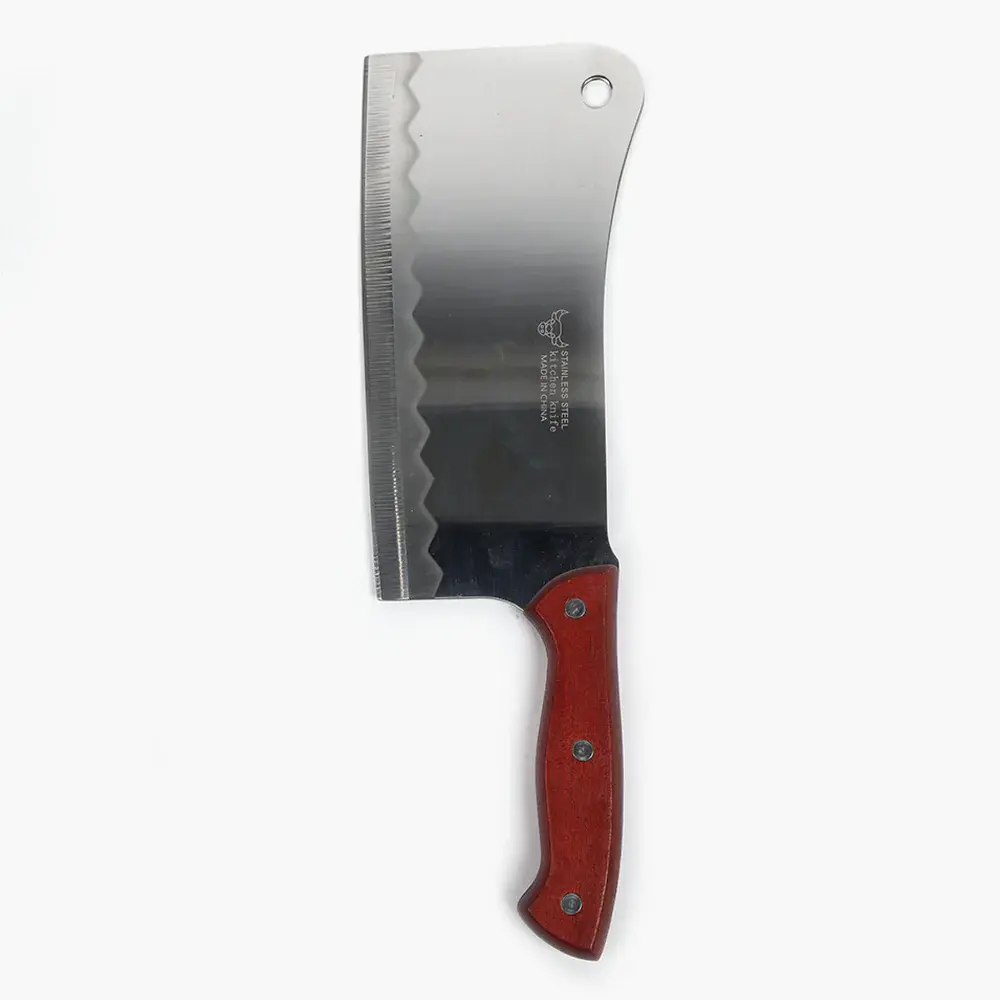
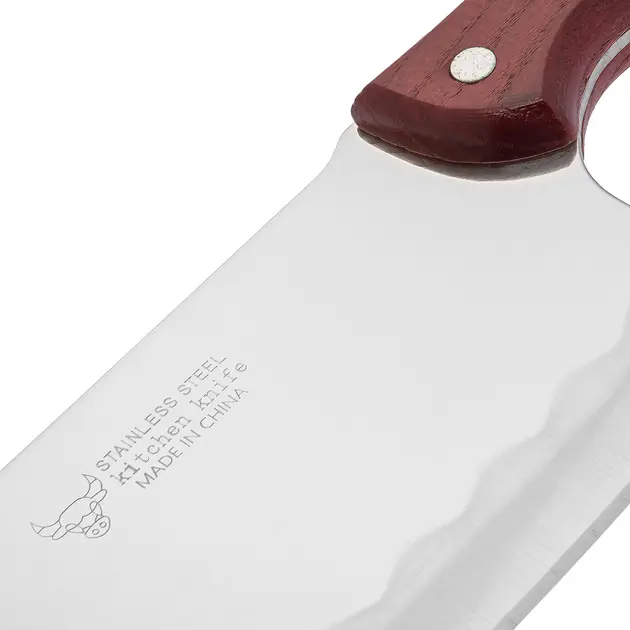
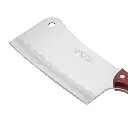
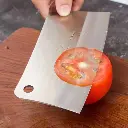
This Cleaver Knife has the strength to get that hard work done in the kitchen. With its strong durable structure and heavy weight this is the ideal cleaver to have as a part of your kitchens utensils. This Meat Cleaver has a slightly curved blade with a wooden handle, the curved blade is great for swift chopping and slices through vegetable easily. This Cleaver is of top quality with superior control and edge. Be warned it is large and heavy, suitable for chopping up pig or lamb off the spit and is ideal for butchering bones and meat. The perfect tool for home or store butchering and dressing of cattle or sheep ,goats etc. It can also be used in a regular butchers or poultry shops for meat dressing or for commercial kitchens and restaurants in food preparation. This tool is sharp and has the weight for the job.
NOTE: Carbon steel is harder than stainless steel and will hold a better edge for longer. However it will rust in prolonged exposure to moisture therefore the tool must be wiped of moisture and hung up to dry after use.
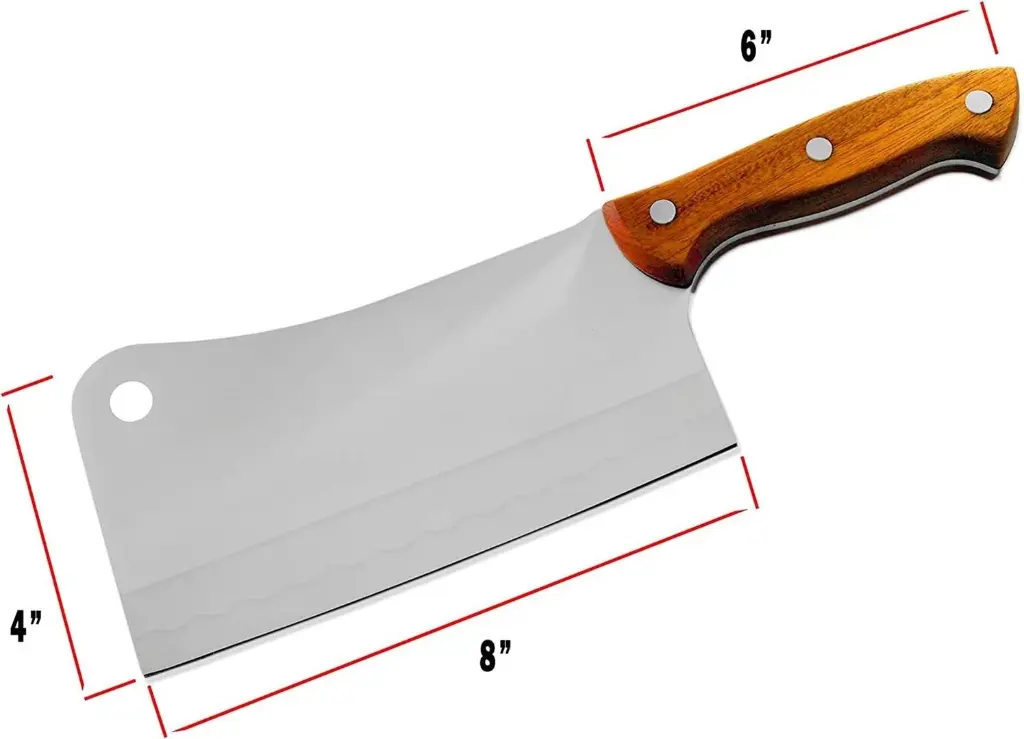
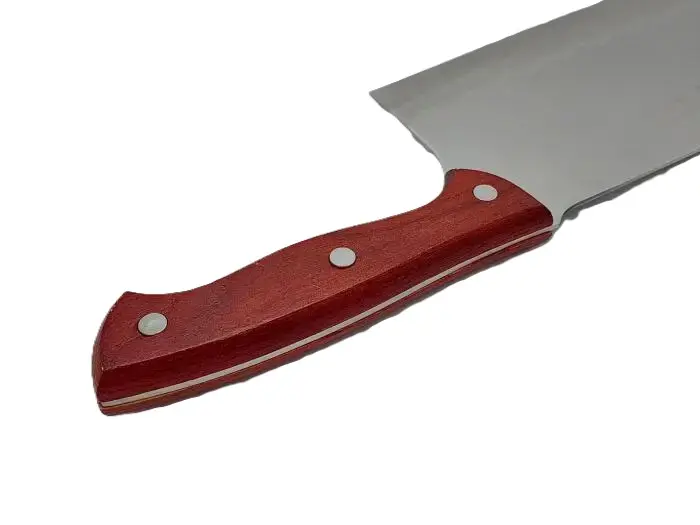
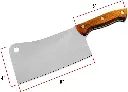
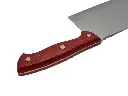
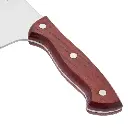
FEATURES:•Cleaver Knife•Carbon Steel Blade•Full Tang•Hardwood Handle with 3 rivets•Total length: 34 cm•Blade materiel: Carbon steel•Blade length: 20 cm•Blade width: 9-10.25 cm•Blade thickness: 3.5 mm•Handle length: 15 cm•Handle thickness: 2.2 cm•Handle width: 2.6 cm•Weight: .445 kg FOR EASY CHOPPING
Tips for using your cleaver correctly:
Cleavers are designed to withstand repeated blows directly into thick meat, dense cartilage, small bone, cutting boards and other supporting surfaces. This resilience is accomplished by using a thicker and heavier bladeCleavers, unlike other knives are designed to be swung like a hammer to hack through meat, small bones and big vegetablesThe tough metal and thick blade of a cleaver also make it a suitable tool for crushing with the side of the blade. This contrasts with certain hard, thin slicing knives, which should not be used for crushing because they can crack under such repeated stress
Tips for getting the most out of your cleaver:
Cut on a proper chopping board instead of plates, glass or ceramic surfaces etc that will more than likely break if the cleaver is used in the correct mannerHand wash – especially if your cleaver has many uses, from cutting raw meats to bigger vegetables. To avoid cross-contamination, you should always hand wash it before proceeding to cut a new food. Use hot soapy water to ensure bacteria is completely eliminated from the blade and handle. What to look for when buying a cleaver:
Heavy - to hack through the meat and bonesRiveted wooden LONG handleStainless steel blade - tough durable and rust freeValue for moneyVersatile – great for taking apart chickens and general hackingThe edge of a cleaver does not need to be particularly sharp, because the knife's design, like that of a hatchet or an axe, relies on sheer momentum to cut efficiently, to slash straight through rather than slicing in a sawing motion.Cleavers should not be used for cutting through solid, thick and hard bones, instead a saw either manual or powered is recommended.
Tips for using your cleaver correctly:
Cleavers are designed to withstand repeated blows directly into thick meat, dense cartilage, small bone, cutting boards and other supporting surfaces. This resilience is accomplished by using a thicker and heavier blade
Cleavers, unlike other knives are designed to be swung like a hammer to hack through meat, small bones and big vegetables
The tough metal and thick blade of a cleaver also make it a suitable tool for crushing with the side of the blade. This contrasts with certain hard, thin slicing knives, which should not be used for crushing because they can crack under such repeated stress
Tips for getting the most out of your cleaver:
Cut on a proper chopping board instead of plates, glass or ceramic surfaces etc that will more than likely break if the cleaver is used in the correct manner
Hand wash – especially if your cleaver has many uses, from cutting raw meats to bigger vegetables. To avoid cross-contamination, you should always hand wash it before proceeding to cut a new food. Use hot soapy water to ensure bacteria is completely eliminated from the blade and handle.
What to look for when buying a cleaver:
Heavy - to hack through the meat and bones
Riveted wooden LONG handle
Stainless steel blade - tough durable and rust free
Value for money
Versatile – great for taking apart chickens and general hacking
The edge of a cleaver does not need to be particularly sharp, because the knife's design, like that of a hatchet or an axe, relies on sheer momentum to cut efficiently, to slash straight through rather than slicing in a sawing motion.
Cleavers should not be used for cutting through solid, thick and hard bones, instead a saw either manual or powered is recommended.
Display Name:
[26216] Cleaver Knife Heavy Duty Stainless Steel .435 kg 8" 20x10 cm